


Views: 104 Author: Site Editor Publish Time: 2025-11-13 Origin: Site


TFT (Thin Film Transistor) and OLED (Organic Light-Emitting Diode) are two leading display technologies widely used in modern electronics. While TFT LCDs rely on a backlight and offer proven reliability and affordability, OLED displays emit light from each pixel for richer colors and deeper blacks. Choosing between them depends on your application, performance requirements, and budget.
Whether you're designing a smartwatch, industrial control panel, or automotive dashboard, the display you choose determines how users see and interact with your product.
The two main options available today are TFT LCD and OLED. Both deliver vivid visuals, but they work in completely different ways — and that difference affects brightness, power consumption, durability, and cost.
Let’s dive into how each technology works and which one is best for your device.
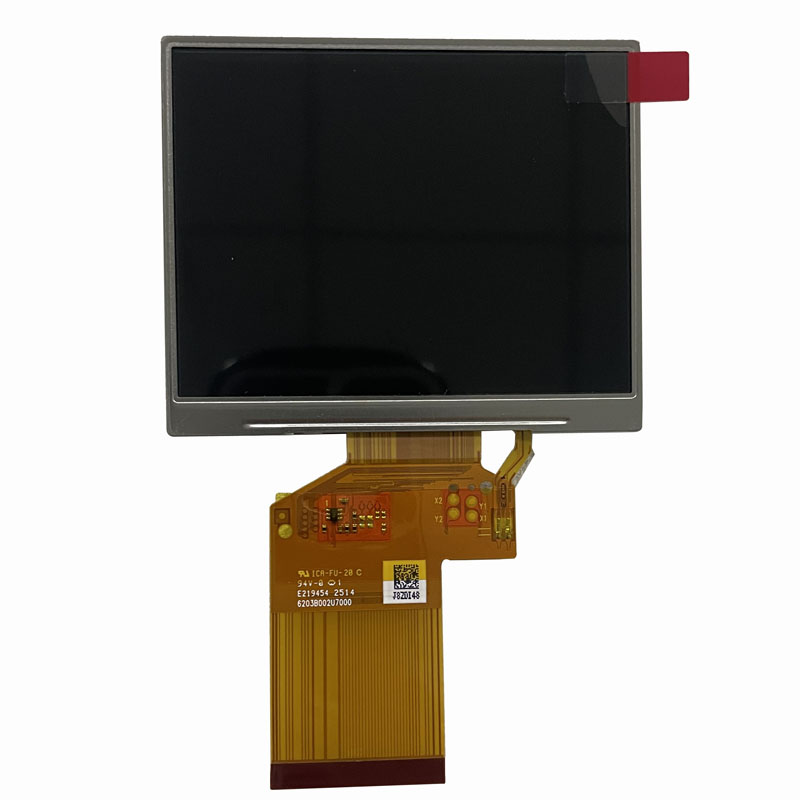 TFT (Thin Film Transistor) LCDs use a liquid crystal layer and a backlight to produce images. Each pixel is controlled by a transistor that adjusts how much light passes through.
Key Features of TFT Displays:
Requires a backlight for illumination
Offers stable image performance and long lifespan
Provides high brightness suitable for indoor and outdoor use
Widely available in many sizes and resolutions
Cost-effective for mass production
TFT LCDs are the most common choice in industrial, automotive, and consumer applications because of their reliability, maturity, and customization flexibility.
OLED (Organic Light-Emitting Diode) is a newer, self-emissive technology — meaning each pixel generates its own light.
This eliminates the need for a backlight, enabling thinner, lighter, and more flexible displays.
Key Features of OLED Displays:
Self-illuminating pixels (no backlight)
Perfect black levels and infinite contrast ratio
Vivid colors and wide viewing angles
Extremely thin and lightweight structure
Ideal for curved and flexible displays
However, OLED panels can suffer from burn-in over time and usually cost more than TFT LCDs.
| Feature | TFT LCD | OLED |
|---|---|---|
| Light Source | LED backlight | Each pixel emits its own light |
| Color Production | Light filtered through RGB subpixels | Direct emission from organic compounds |
| Power Efficiency | Higher (backlight always on) | More efficient for dark images |
| Thickness | Thicker (requires backlight) | Very thin, can be flexible |
| Contrast Ratio | Moderate | Infinite (true black) |
| Viewing Angle | Good (improved with IPS) | Excellent |
| Durability / Burn-in | Very stable | Possible image retention over time |
| Cost | Lower | Higher |
| Common Use | Industrial, automotive, consumer electronics | Smartphones, premium displays, wearables |
✅ Long-Term Reliability – Proven durability under long operating hours and extreme temperatures.
✅ High Brightness Options – Sunlight-readable versions (up to 1500 nits) available.
✅ Wide Temperature Range – Typically -30°C to +85°C, ideal for outdoor and industrial applications.
✅ Customizable Modules – Sizes, interfaces, and touch integration can be tailored for OEM needs.
✅ Lower Cost – Economical for large-scale production.
Perfect For:
Industrial monitors, medical equipment, vehicle displays, handheld terminals, and consumer devices.
✅ Vibrant Visuals – Exceptional color contrast and deep blacks.
✅ Wide Viewing Angles – Nearly identical color from any direction.
✅ Thin and Flexible Design – Enables foldable and edge displays.
✅ Fast Response Time – Ideal for video or high-speed graphics.
Perfect For:
High-end smartphones, smartwatches, digital signage, and premium automotive clusters.
| Application Type | Recommended Display | Reason |
|---|---|---|
| Industrial Control Panels | TFT LCD | Rugged, cost-effective, stable over time |
| Medical Devices | TFT LCD or IPS | Accurate colors, long lifespan |
| Smart Consumer Electronics | OLED | Better color and design flexibility |
| Automotive Displays | Both | TFT for durability; OLED for luxury interiors |
| Outdoor Equipment | High Brightness TFT | Sunlight readable and heat resistant |
| Wearables / Portable Devices | OLED | Thin and energy-efficient |
In other words: TFT excels in endurance, while OLED wins in aesthetics.
From a manufacturing perspective, TFT displays are more affordable and have longer operational lifespans, typically over 50,000 hours.
OLED displays, while visually superior, can degrade faster due to the organic materials in each pixel — especially blue ones.
For products requiring continuous operation or long service life, such as industrial or automotive systems, TFT displays remain the safer investment.
The boundary between TFT and OLED is narrowing as technology evolves:
High-contrast TFT panels with advanced LED backlighting
Mini-LED and Micro-LED backlight systems improving brightness and color depth
Flexible TFT substrates for thinner, bendable screens
Hybrid display modules combining TFT durability with OLED-like visuals
These innovations mean that even traditional TFT displays can now achieve impressive image performance for modern applications.
When comparing TFT vs OLED displays, your choice depends on your application’s priorities:
Choose TFT LCD for industrial reliability, cost efficiency, and outdoor durability.
Choose OLED for premium visuals, flexibility, and design innovation.
Both technologies have unique strengths — and by understanding their differences, you can choose the right display to power your next-generation device.


