


Views: 104 Author: Site Editor Publish Time: 2026-08-19 Origin: Site


Transmissive, transflective, and reflective LCDs use different optical paths to create a visible image. The choice directly affects brightness, outdoor readability, backlight power, contrast, color quality, thermal design, and system cost.
Most industrial color TFT LCD modules are transmissive. They rely on an LED backlight and can deliver strong indoor image quality, wide color gamut, and high brightness. Transflective LCDs combine backlight illumination with reflected ambient light, while reflective LCDs depend mainly on external light and are more common in specialized low-power applications.
This guide compares the three technologies and explains when a high-brightness transmissive TFT may be a better choice than a transflective display for outdoor industrial, automotive, kiosk, handheld, and embedded equipment.
Choose transmissive TFT LCD when you need strong color, high contrast indoors, IPS viewing, touch integration, higher resolution, and predictable performance under controlled backlight.
Choose high-brightness transmissive TFT when outdoor readability is important but you still need modern color, touch, high resolution, and standard industrial supply.
Consider transflective LCD when battery life and visibility in strong ambient light are more important than maximum color saturation or broad model availability.
Choose reflective LCD mainly for ultra-low-power products that can operate using ambient light and do not require the visual performance of a modern backlit TFT.
LCD Type | Main Light Source | Outdoor Behavior | Typical Strength |
|---|---|---|---|
Transmissive | LED backlight | Needs enough luminance and reflection control | Color, brightness, IPS, resolution, availability |
Transflective | Backlight + reflected ambient light | Ambient light can support readability | Outdoor visibility with lower backlight dependence |
Reflective | Ambient light | Improves as external light increases | Very low power |
A transmissive LCD uses a backlight behind the liquid crystal panel. Light passes through optical films, the TFT cell, RGB color filters, and front polarizer before reaching the viewer.
This is the dominant architecture for industrial color TFT modules because it supports:
High color quality
High resolution
IPS wide viewing angle
Touch integration
High-brightness backlight options
Standard RGB, LVDS, MIPI, and eDP interfaces
Toroson VI104V602 is explicitly specified as a transmissive color active-matrix TFT LCD. It uses a 10.4-inch 1024×768 IPS panel, 30-pin LVDS interface, approximately 600 cd/m² brightness, and a wide industrial temperature range.
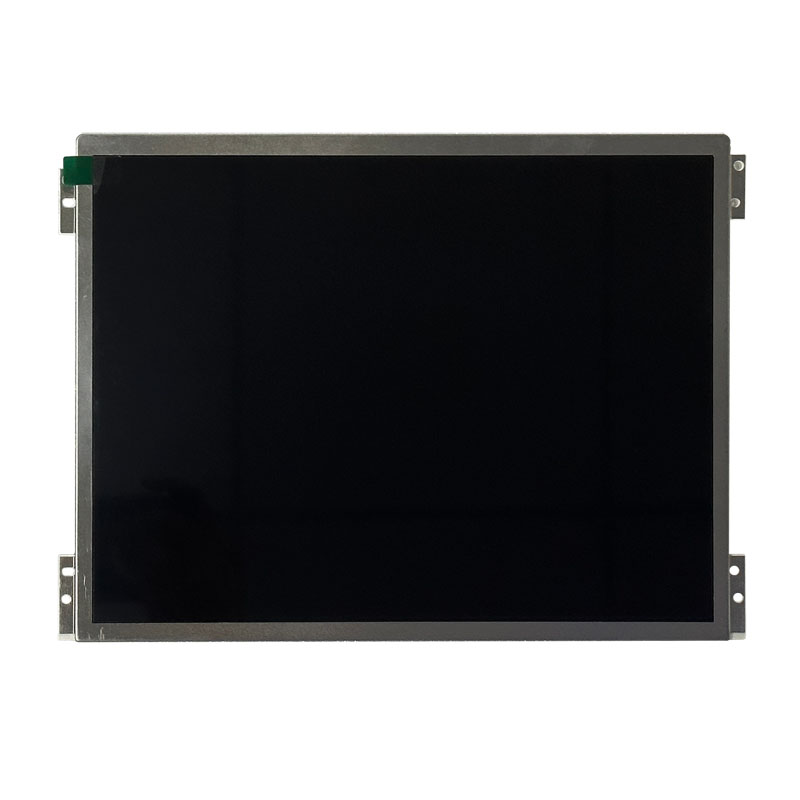
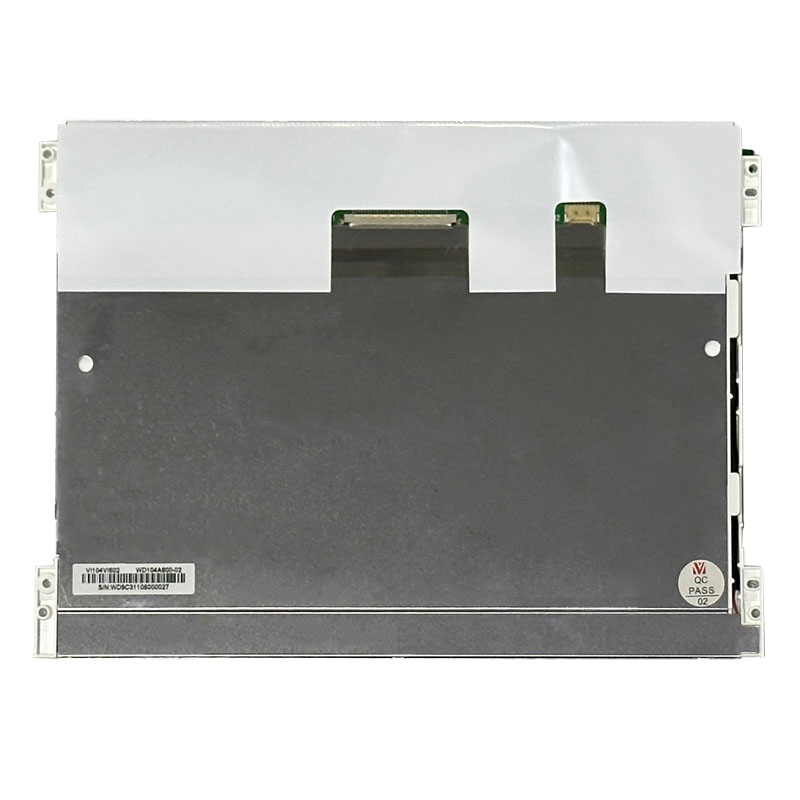
VI104V602 front and rear views: a typical transmissive industrial TFT module with integrated backlight and LVDS interface.
A transmissive panel like this is usually the easiest starting point for machine HMI, medical, control-console, embedded PC, and kiosk projects because the optical, electrical, and mechanical ecosystem is mature.
A transflective LCD combines transmissive and reflective behavior.
Part of the optical system allows the backlight to illuminate the image from behind, while another part uses ambient light entering from the front and reflects it back toward the viewer.
This means the display can use:
The backlight in low-light environments
Ambient light in bright environments
A combination of both under intermediate conditions
The primary advantage is reduced dependence on a continuously powerful backlight.
Battery-powered outdoor instruments
Handheld logistics terminals
Portable measurement equipment
Marine or field devices
Equipment used for long periods in direct daylight
Important: Transflective color TFT modules are less common than standard transmissive TFTs. Model availability, color performance, viewing angle, resolution, touch compatibility, and cost should be checked before designing the enclosure around a specific panel.
A reflective LCD does not depend primarily on a backlight. Ambient light enters from the front, passes through the LCD optical stack, reflects from a rear reflector, and returns toward the viewer.
Because there is little or no continuous backlight load, reflective displays can offer very low power consumption.
Their limitations can include:
Weak visibility in darkness without front lighting
Lower color performance compared with modern transmissive TFTs
Fewer high-resolution industrial options
More specialized supply chains
Industrial equipment increasingly demands:
High resolution
Full-color graphics
IPS viewing angles
PCAP touch
High-speed interfaces
High brightness
Standard controller compatibility
Transmissive TFT technology supports these requirements across a much broader range of sizes and resolutions.
That is why many outdoor projects no longer start by asking for a transflective panel. Instead, engineers evaluate whether a high-brightness transmissive TFT plus optical improvements can meet the outdoor-readability target.
Requirement | High-Brightness Transmissive | Transflective |
|---|---|---|
Color quality | Usually stronger | Application dependent |
Model availability | Broad | More limited |
Backlight power | Higher at full outdoor brightness | Can be lower in strong ambient light |
Touch integration | Very common | Must be evaluated carefully |
Resolution choices | Very broad | Often fewer options |
Outdoor readability | Strong when brightness and reflection control are optimized | Can benefit directly from ambient light |
The Innolux DD080IA-20A demonstrates the direction taken by many modern automotive displays. It is a normally black IPS transmissive module with 8-inch active area, 1280×720 resolution, 40-pin LVDS interface, approximately 1300 cd/m² brightness, anti-glare surface treatment, and wide operating-temperature capability.
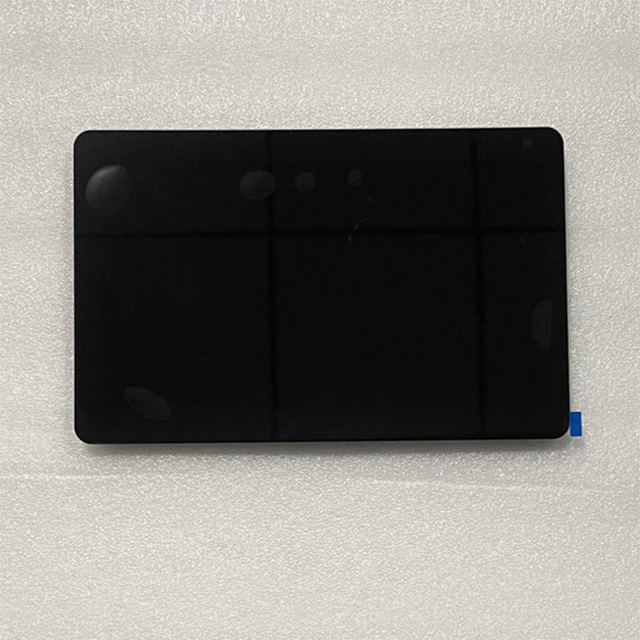
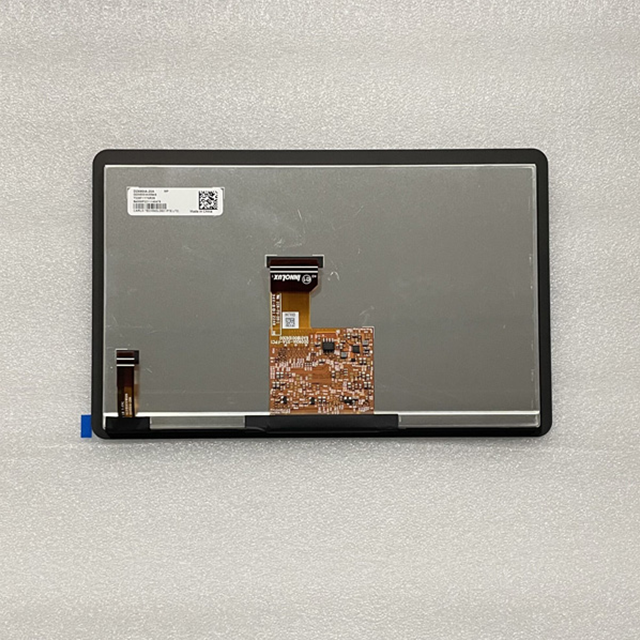
DD080IA-20A: high-brightness transmissive automotive TFT with anti-glare treatment and wide-temperature design.
This approach uses higher backlight output rather than a transflective optical structure, while still supporting IPS viewing, modern color graphics, and automotive HMI requirements.
For a broader discussion of outdoor luminance, read Sunlight Readable Displays: Technical Implementation of High-Brightness LCDs.
A transmissive display can still look washed out outdoors even when the backlight is powerful.
The main reason is reflected ambient light. External light raises the apparent black level and reduces the contrast seen by the user.
Outdoor readability therefore depends on:
LCD luminance
Surface reflectance
Cover-glass reflection
Touch-panel reflection
Optical bonding
Anti-glare or anti-reflective treatment
Viewing angle
Ambient-light direction
For reflection control, read Anti-Glare vs Anti-Reflective vs Optical Bonding.
An air gap between the TFT LCD and cover glass creates additional reflective interfaces.
Optical bonding fills this gap with a transparent adhesive whose refractive index is closer to the surrounding optical materials.
Potential advantages include:
Lower internal reflection
Higher perceived contrast
Better sunlight readability
Reduced condensation risk
Improved mechanical stability
This is one reason a bonded high-brightness transmissive LCD can outperform an unbonded display with a similar headline brightness specification.
A FOG or cell-level LCD can be useful when an OEM wants more control over the optical stack.
The Innolux ZE121BC-02A is a 12.1-inch 1024×768 transmissive IPS TFT LCD cell with LVDS interface, anti-glare surface treatment, approximately 1000:1 contrast, and wide viewing characteristics.
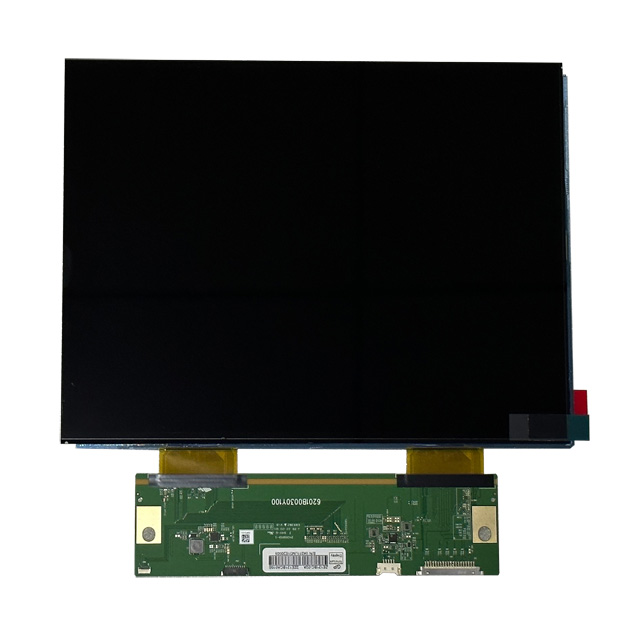
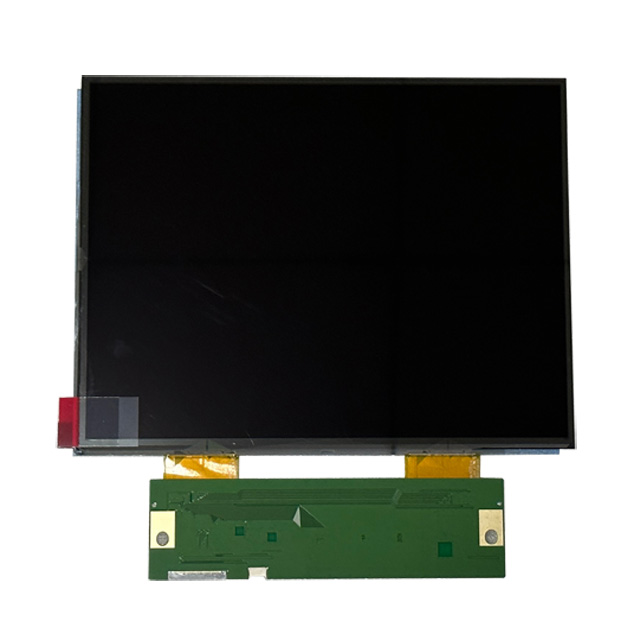
ZE121BC-02A FOG cell: useful for OEMs designing their own backlight, touch, bonding, and enclosure structure.
A cell or FOG approach gives integrators more flexibility to design a custom backlight, touch stack, optical bonding process, and cover-glass system, but it also requires more engineering responsibility than buying a completed LCM.
High-brightness transmissive LCDs need substantial LED power when operated at maximum luminance.
A transflective structure can reduce full-backlight dependence when strong ambient light is available.
This can be valuable for:
Battery-operated handheld devices
Remote field instruments
Outdoor logistics terminals
Portable measurement equipment
However, system power should be evaluated as a whole. The processor, wireless radios, touch controller, sensors, heater, and backlight driver may all contribute significantly to total consumption.
For LED-driver design, read TFT LCD Backlight Voltage, Current and PWM Dimming Guide.
Transmissive TFT LCDs normally provide the strongest platform for saturated color, dark-state contrast, photo-rich interfaces, and consistent graphics.
Transflective designs divide the optical path between transmitted and reflected light. Depending on the design, this can create tradeoffs in:
Color saturation
Black level
Backlight efficiency
Viewing angle
For a simple outdoor meter, these tradeoffs may be acceptable. For automotive infotainment, medical graphics, or a full-color industrial HMI, they may not be.
If contrast is a critical requirement, see LCD Contrast Ratio Explained.
Application | Recommended Direction | Why |
|---|---|---|
Factory HMI | Transmissive | Strong indoor readability, broad size/interface availability |
Outdoor kiosk | High-brightness transmissive | Touch, color, large size, optical bonding support |
Automotive display | High-brightness transmissive | IPS, color, high resolution, dynamic lighting |
Battery handheld used outdoors | Transflective may be worth evaluating | Ambient light can reduce backlight demand |
Medical equipment | Transmissive IPS | Color, grayscale, viewing stability, calibration |
Ultra-low-power outdoor indicator | Reflective / transflective | Minimizes continuous backlight power |
A transflective panel may help in strong daylight, but availability, color, touch, resolution, interface, viewing angle, and cost may be weaker than a modern high-brightness transmissive alternative.
Reflection can still wash out a very bright screen.
Better approach: evaluate luminance, AG/AR treatment, bonding, cover glass, contrast, and enclosure shading together.
Running a high-brightness backlight continuously can increase power consumption and internal temperature.
A touch layer and cover glass can reduce the sunlight performance of the bare LCD.
A specialized transflective panel may not have the same lifecycle, size, interface, or second-source options as mainstream transmissive TFTs.
A panel approved under office lighting may perform very differently in direct sunlight or near a vehicle windshield.
Screen size and native resolution
Indoor / semi-outdoor / direct-sunlight environment
Transmissive, transflective, or open to recommendation
Brightness target
Battery-powered or fixed-power system
Maximum backlight power
Touch requirement
Optical bonding requirement
AG / AR / AF surface treatment
Viewing-angle requirement
Operating-temperature range
Interface: RGB, LVDS, MIPI DSI, eDP
Controller platform
Mechanical thickness limit
Prototype and annual production volume
Required supply lifecycle
A transmissive LCD relies on a backlight. A transflective LCD uses both backlight illumination and reflected ambient light.
It can perform well because ambient light contributes to the image, but real performance depends on the specific panel, polarizer, touch stack, reflectance, color design, and viewing conditions.
Transmissive technology offers broader choices in resolution, IPS viewing, touch integration, interfaces, color quality, and model availability.
Yes. High-brightness backlighting combined with low-reflection optical design, AG/AR treatment, optical bonding, and good contrast can make transmissive TFT displays suitable for outdoor use.
It can reduce backlight demand in bright ambient conditions. Total system power still depends on the processor, radios, touch, sensors, heaters, and other electronics.
A reflective LCD uses ambient light reflected through the display rather than depending mainly on a rear backlight.
Modern automotive systems commonly use high-brightness transmissive IPS displays because they support wide viewing, high resolution, full color, touch integration, and controlled day/night dimming.
No. Optical bonding reduces reflection between layers but does not change the fundamental transmissive optical mode of the LCD.
A transflective display may be worth evaluating when reducing backlight power is a major goal, but size, resolution, color, touch, interface, and supply requirements should also be considered.
Provide the size, resolution, interface, ambient-light condition, brightness target, battery or fixed-power requirement, temperature range, touch structure, optical bonding requirement, viewing angle, and expected quantity.
There is no universal winner between transmissive, transflective, and reflective LCD technologies.
For most modern industrial and automotive color displays, transmissive TFT remains the most flexible option because of its broad supply, IPS availability, high resolution, touch compatibility, and strong color performance.
When outdoor readability is required, first evaluate whether a high-brightness transmissive panel combined with optical bonding, AG/AR treatment, and proper thermal management can meet the requirement. Consider transflective technology when battery life and strong ambient-light operation justify the narrower model selection and optical tradeoffs.
Send the display size, resolution, interface, outdoor-lighting condition, brightness target, battery or fixed-power requirement, operating temperature, touch structure, optical-bonding requirement, and expected quantity. Toroson can help compare transmissive, high-brightness, and specialized outdoor TFT solutions for your OEM project.


